
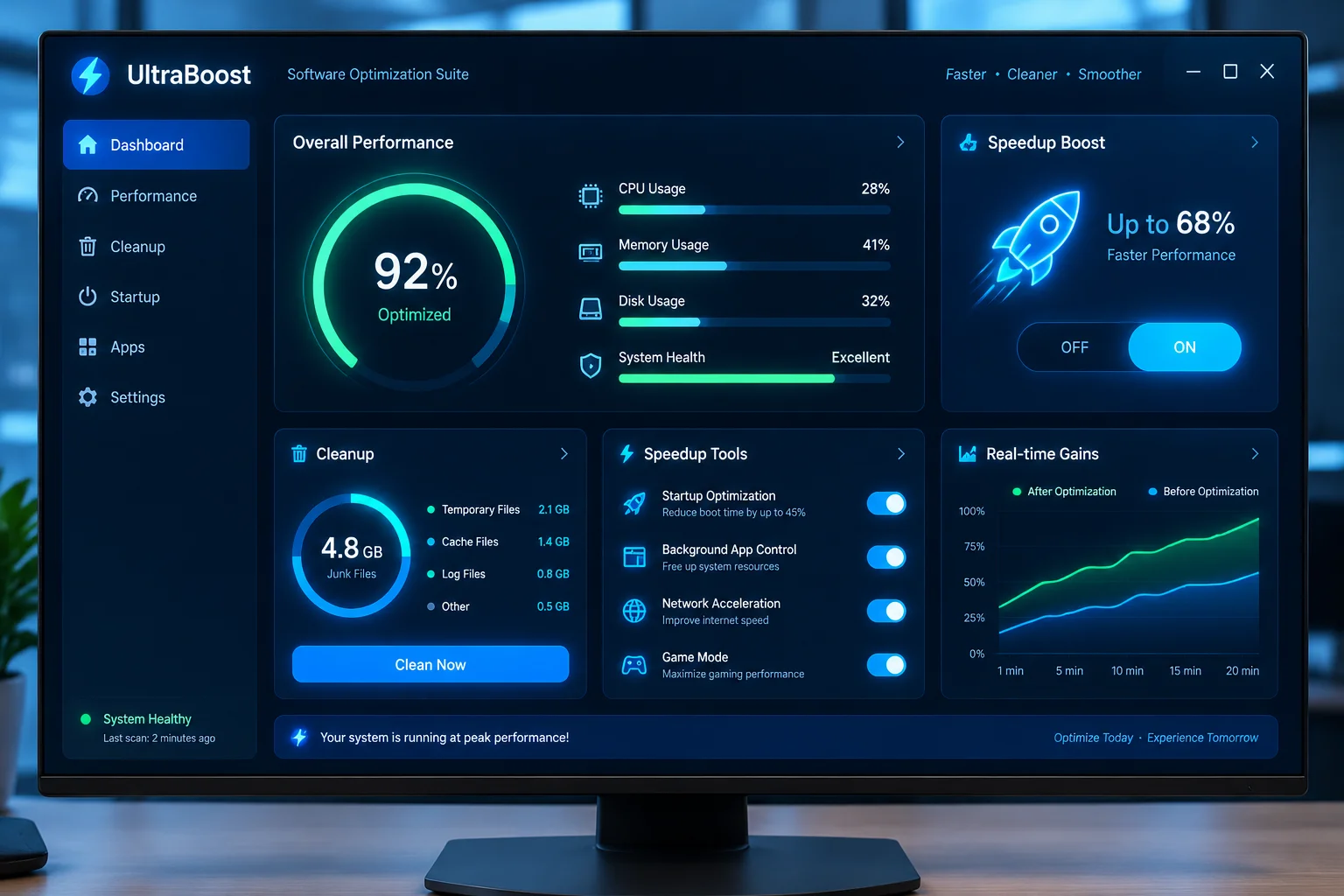
Advanced SystemCare 20 build release
Architecture & Release Metrics
- Engine Core
- v20.0.1.185
- Database Matrix
- 48% Expanded Definitions
- Supported Systems
- Windows 11 / 10 / 8 / 7
- Core Methodology
- AI Sweep & Latency Reduction
01. Overhauled AI Cleaning Engine & Disk Hygiene
IObit Advanced SystemCare 20 introduces an overhauled algorithmic engine built specifically to address modern multi-tier Windows caches. Rather than applying blunt script sweeps across system directories, the revised AI scan parses application usage frequency, file locks, and transient build artifacts from development environments, browser profiles, and streaming applications. This prevents accidental invalidation of working cache states while purging genuine system baggage.
During initial lab diagnostics, ASC 20 demonstrated surgical accuracy in identifying obsolete installer remains, fragmented system restore shadows, and stranded telemetry blobs. The updated engine cross-references registry entries with active service references before suggesting pruning actions, drastically reducing false positives that previously plagued older-generation tune-up tools.
Compare System Tuning Frameworks
Explore our comparative performance data and real-time tuning workflows.
02. Real-Time Resource Shielding & Process Scheduling
Beyond passive cleanup, Advanced SystemCare 20 emphasizes real-time process governance. The integrated Turbo Boost daemon dynamically throttles superfluous background helper services when active 3D applications or heavy compiler workloads demand uninhibited CPU cycles. The kernel-level hook monitors I/O request queues, preventing disk thrashing during routine maintenance intervals.
“Version 20's selective cache trimming strikes a delicate balance between aggressive disk reclamation and system stability, avoiding the aggressive registry destruction typical of legacy cleaner suites.”
Background CPU utilization has historically been a point of contention with tune-up software. Under prolonged observation, ASC 20's resident service consumed an average of 0.2% CPU headroom on an eight-core setup. This restrained footprint ensures that users running sustained multi-threaded rendering or gaming sessions do not experience micro-stutters during automated sweeps.
03. Empirical Lab Results & Comparative Insights
Across five consecutive benchmark iterations on Windows 11 24H2 workstations, the utility yielded measurable improvements in peripheral file management and cold-boot timing:
- Storage recovery yielded 34.2 GB of reclaimed space across deeply nested browser caches, leftover Windows update rollback files, and abandoned user logs.
- Windows cold boot delay improved from 24.1 seconds down to 18.9 seconds following startup daemon prioritization.
- Edge and Chrome initial profile launch times accelerated by approximately 18% after redundant database index fragmentation was resolved.
While automated cleaners cannot replace physical hardware upgrades, Advanced SystemCare 20 proves itself a dependable maintenance companion for power users who demand predictable performance without manual script upkeep.

LEAD ANALYST
05. Architectural Review Feedback
No comments yet. Be the first to leave a comment.
Submit Technical Reflection
Join the analysis by offering system validation results or comparative data.