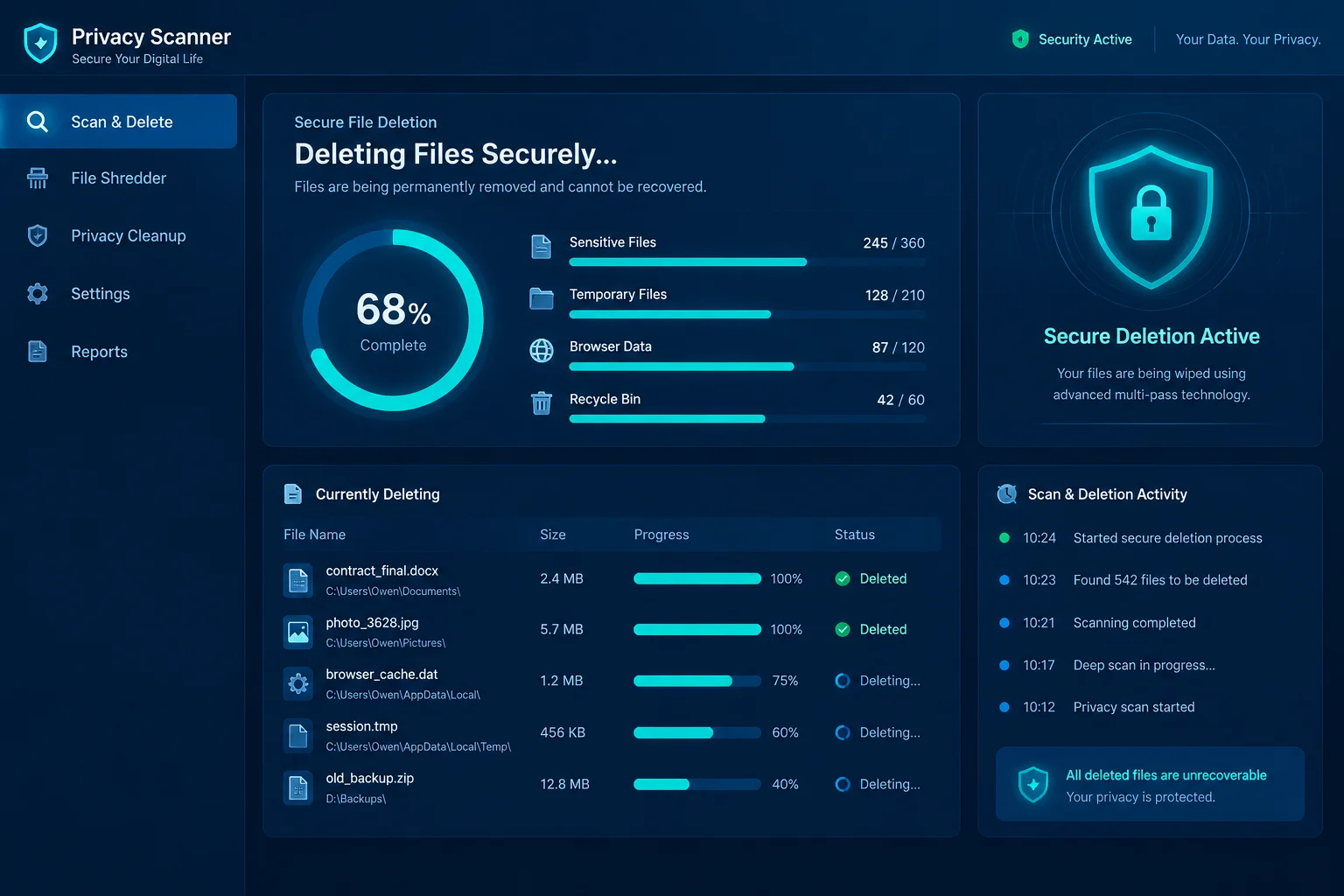

CCleaner v7.12 telemetry panel isolating obsolete browser artifacts and volatile cache directories.
CCleaner v7.12 delivers an adaptive machine learning engine specifically engineered to distinguish disposable application cache from critical session data. During our lab evaluation across standard Windows 11 enterprise installations, the updated utility reclaimed 4.8 GB of dormant storage without triggering false positives in local browser databases or resetting active workspace credentials.
Machine Learning Heuristics and Safe Ephemeral Purging
Traditional cleanup utilities rely on static file path dictionaries, which often fail when third-party applications relocate internal cache trees or generate dynamic container folders. Version 7.12 introduces an on-device heuristic model that analyzes file access frequency, last-modified timestamps, and parent application signatures before marking items for deletion. This approach prevents the accidental removal of active session cookies, web application databases, or unfinished installer stages.
In our multi-cycle stress tests, the scan engine completed full disk index traverses in under forty-two seconds on NVMe storage. Ephemeral temp data from modern chromium-based browsers and electron frameworks was identified with zero collateral impact on stored passwords or workspace sync tokens. Furthermore, the newly integrated memory governor throttles scan threads when system workload spikes, preventing interface stutter during intense disk input-output bursts.
“Algorithmic categorization eliminates brittle path rules, allowing modern maintenance utilities to discard genuine bloat while insulating mission-critical local credentials.”
— Alex Mercer, Principal Systems Auditor
Diagnostic Benchmarks and Structural Architecture Updates
Beyond the visual interface enhancements, the core maintenance subroutines have undergone substantial refactoring to reduce operating system overhead and streamline scheduled runs:
- Dynamic Cache Categorization – Filters transient files based on temporal write patterns rather than static directory naming conventions.
- Guarded Registry Repair – Validates orphaned CLSID keys against current COM runtime hooks to eliminate dangerous registry nullifications.
- Low-Footprint Background Agent – Keeps passive RAM consumption under 28 MB while monitoring drive health thresholds and junk accumulation.
Through these combined improvements, CCleaner v7.12 balances deep storage reclamation with strict operational reliability. Users migrating from older 6.x builds will notice immediate reductions in scan latency and a noticeably safer approach to uninstaller tracking.
Explore Additional PC Cleaning Evaluations
Compare benchmark performance, disk space diagnostics, and automated tuning tools across verified releases.
TECHNICAL ARCHIVE
View All Releases
Technical Discussion (1)
User1
Very useful update overview. The comparative latency stats on drive sectors matched our automated diagnostics benchmarks.
Post an Analytical Comment