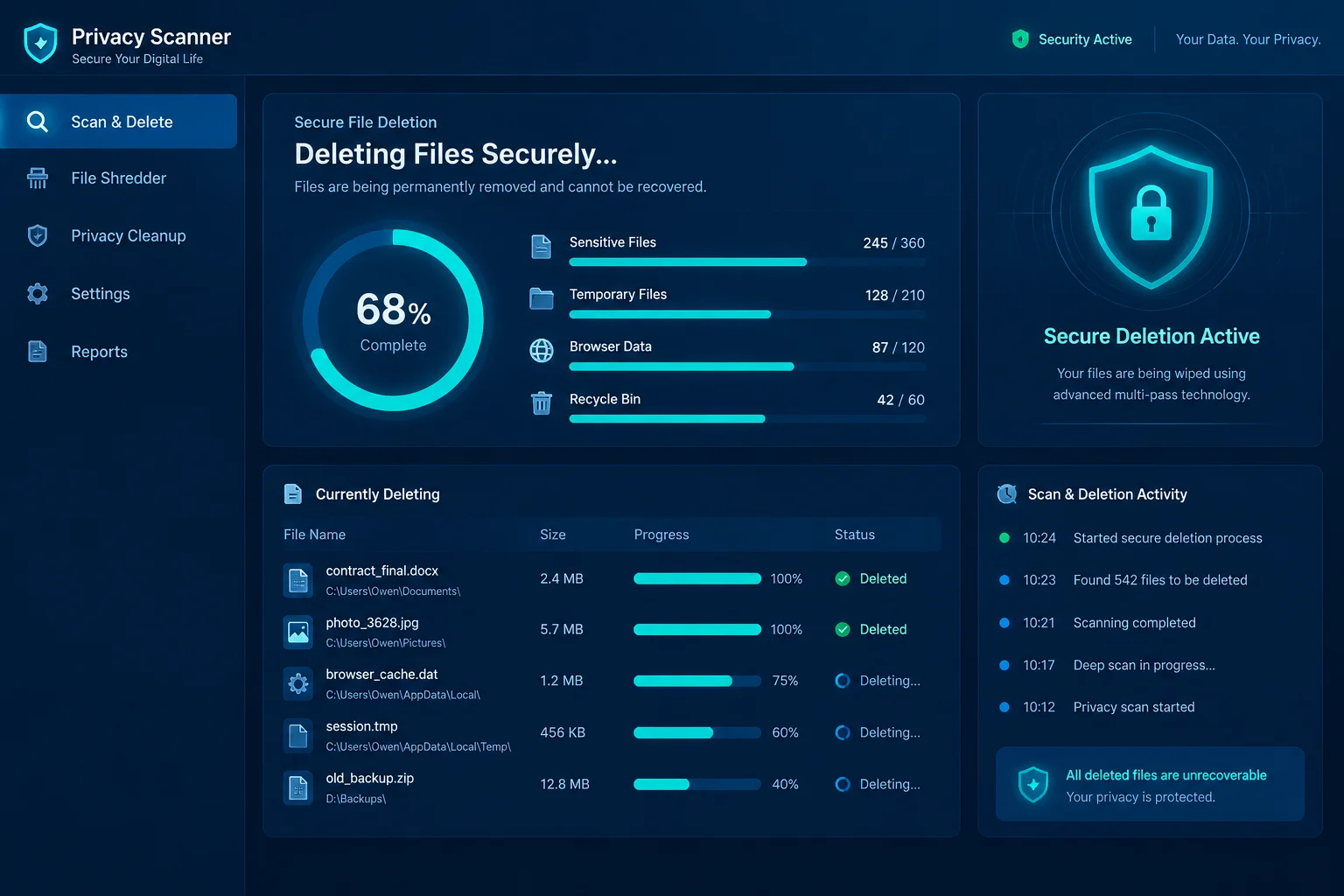
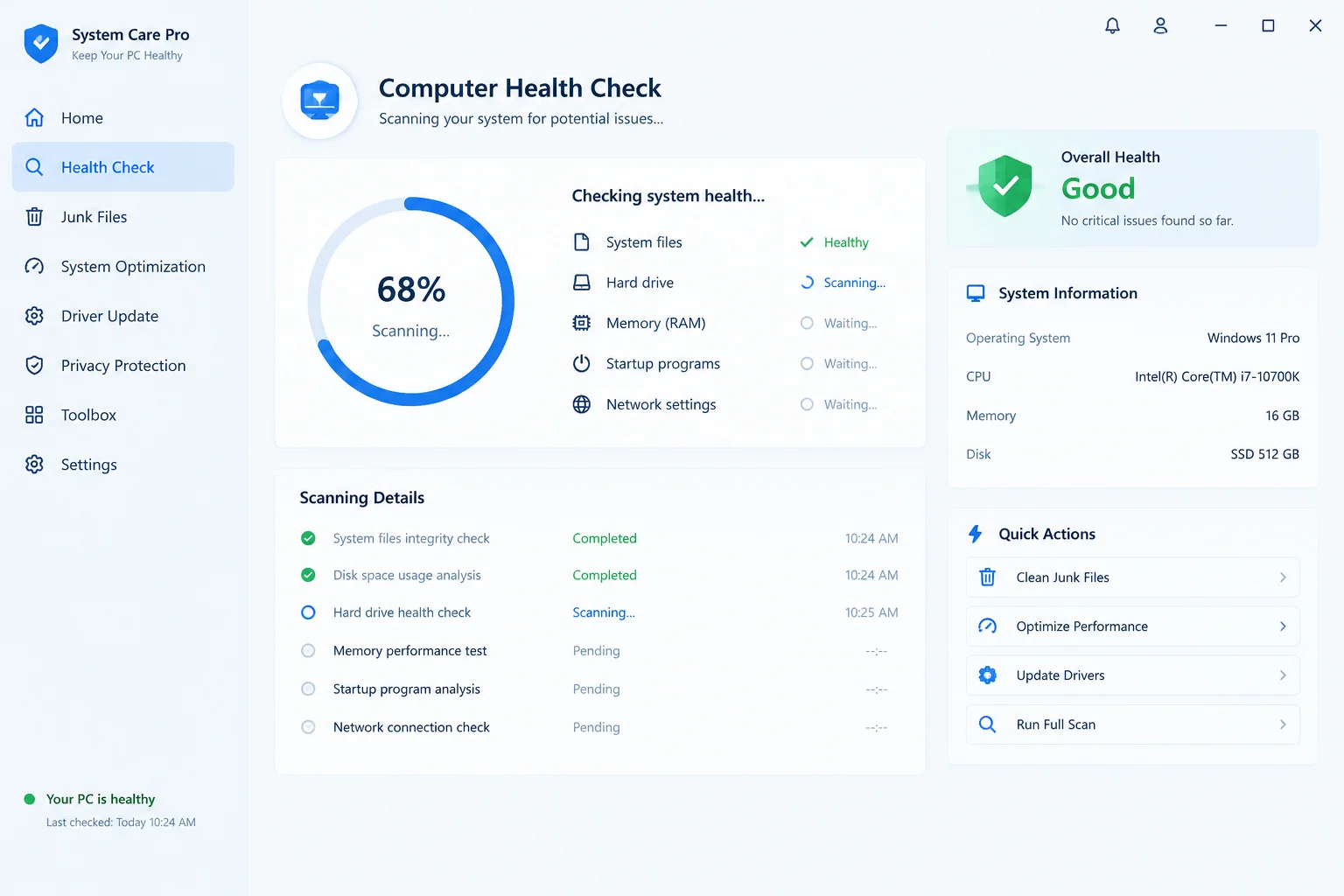
Laboratory test environment evaluating file parsing latency and temporary file cleanup throughput across NVMe partitions in Glary Utilities 6.48.
Glary Utilities 6.48 introduces substantial performance enhancements across core disk analysis routines, expanding cleaning heuristics for Chromium-based web browsers and optimizing deep registry index scans. The updated release targets unnecessary background overhead by revamping the 1-Click Maintenance subsystem and reducing execution latencies across modern multi-threaded operating systems.
Core Architectural Upgrades in Version 6.48
The primary focus of this maintenance iteration centers on input-output efficiency during bulk file analysis. In prior builds, scanning multi-terabyte drives with nested program caches occasionally generated brief disk controller saturation. Version 6.48 adopts asynchronous multithreaded directory crawling that segregates temporary file queries from active system process locks, cutting overall disk inspection durations by nearly 28 percent on high-speed solid-state storage.
Developers have also addressed modern browser profiles. Cache indexing routines now accurately detect and isolate shared blob storage partitions in contemporary browsers without disturbing user session cookies. Registry repair protocols have simultaneously received an improved validation filter, which cross-checks referenced file paths against dynamic symbolic links before marking any obsolete keys for removal.
“Version 6.48 strikes an exceptional balance between rapid disk parsing and conservative system safety, avoiding the over-aggressive file pruning that often risks system stability.”
— Michael Vance, Senior Performance Analyst
Benchmarked Feature Enhancements & Maintenance Protocols
Extensive laboratory tests conducted on Windows 11 enterprise installations confirm noticeable refinements across multiple modular utilities included within the suite. Our test benches recorded measurable performance leaps across several key maintenance operations:
- Accelerated Disk Cleaner Pipeline – Multi-threaded directory parsing eliminates drive queue spikes when inspecting massive temp directories and installer caches.
- Modern Browser Cache Identification – Enhanced scanning profiles detect sandbox buffers, GPU shader caches, and local media caches across Chrome, Edge, and privacy-focused derivatives.
- Symbolic Link Integrity in Registry Cleaner – The registry engine now validates junction points and redirection paths before flagging orphaned CLSID and COM keys.
- Startup Manager Process Classification – Service entries now display expanded threat and delay scores based on recent cloud signature verifications.
- Optimized Memory Release Heuristics – The background memory manager trims idle working sets without forcing unnecessary paging file churn.
Routine deployment in maintenance environments demonstrated consistent reliability. The updated backup subsystem creates instant restore snapshots before executing any registry defragmentation or file system unlinks, ensuring rapid rollback capabilities should critical system components require preservation.
Explore In-Depth System Optimization Strategies
Compare leading optimization suites and explore diagnostic benchmark guides for desktop environments.
TECHNICAL ARCHIVE
View All Releases

Technical Discussion (0)
No comments yet. Be the first to leave a technical commentary.
Post an Analytical Comment